


How Much Does a Vape Cost? Prices, Deals, and How to Actually Save
“How much does a vape cost” is a simple question with a frustrating answer, because it ranges from a few dollars for a small disposable to a lot more for an advanced setup. What actually matters isn’t the sticker price on day one — it’s what you spend over a month or a year, and whether you’re getting real product for it. Plenty of people chase the cheapest vape and end up spending more, either on a string of disposables or on a counterfeit that performs badly. This guide breaks down what drives vape prices, how to think about real cost, and the honest ways to save without gambling on fakes.
We price everything competitively at Pomona Smoke N Vape and would rather you save money and come back than overspend once, so here’s the straight version.
What drives the price of a vape
Prices vary because you’re really buying one of several different things when you say “a vape.” The main categories sit at different price points for good reasons.
Disposables are the cheapest to start with because the whole device is one-and-done. A small disposable costs little up front; a large, high-puff rechargeable one costs more but holds far more liquid. The catch is that the cost repeats every time one runs out, so the real expense is ongoing, not one-time.
Pod systems cost more up front — you’re buying a reusable device — but far less over time, because you then only buy juice or pods instead of a whole new device each time. For a regular vaper, this is where the savings live.
Box mods and advanced kits are the priciest hardware, built for power, control, and customization. They suit enthusiasts, and they come with their own running costs in coils and batteries.
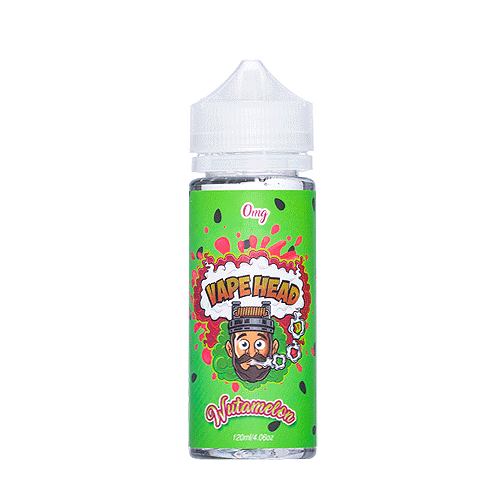
E-liquid is its own line item, priced by bottle size and quality. Bigger bottles cost less per milliliter, so buying larger saves money once you’ve found a flavor you love.
Prices also shift with brand, features, and local factors, so rather than quote exact numbers that go stale, the useful thing is to understand the categories and compare within them. Ask us for current pricing on anything specific — we’ll give you a straight answer, not a number that moves depending on who’s asking.
The number that actually matters: cost per puff
Here’s the single most useful idea in this whole guide. Stop comparing sticker prices and start thinking about cost per puff — how much you pay for the amount of vaping you actually get.
A small, cheap disposable looks like a bargain until you realize how little liquid it holds and how quickly you’ll buy the next one. A bigger device costs more up front but often delivers far more puffs per dollar. And a refillable device, where you’re buying juice instead of whole devices, usually wins the cost-per-puff comparison by a wide margin for anyone who vapes regularly.
This is why “cheap” is a trap if you only look at the shelf price. The cheapest device today can be the most expensive habit this month. When you compare options, divide the price by roughly how long it’ll last you, and the real value becomes obvious. Our guides on how long a disposable lasts and disposables in general help you estimate that.
Why the cheapest vape usually isn’t the best deal
There’s cheap, and there’s suspiciously cheap, and the difference matters. When a name-brand disposable or device is priced far below everyone else in town, that’s rarely generosity — it’s usually a counterfeit. Fakes use lower-quality batteries and unregulated liquid, so they perform badly, fade fast, and raise real safety concerns. You “saved” a few dollars and got a worse, shorter-lived, potentially unsafe product.
Genuine product from authorized distributors costs the shop more, so it costs you a little more. That small premium is what buys you a device that actually works, lasts its rated life, and is what it claims to be. Paying a bit more for authentic is almost always cheaper in the end than paying less for a fake you’ll be disappointed in. The goal isn’t the lowest price — it’s the best value for real product.
How to actually save money on vaping
There are honest ways to spend less that don’t involve gambling on counterfeits. These are the ones that work.
Switch to refillable if you vape daily. This is the biggest saving available. If you’re finishing a disposable every couple of days, a pod system usually pays for itself within a few weeks and keeps saving after that, because juice is far cheaper than buying whole devices. Our pod systems guide covers the switch.
Buy juice in larger bottles. Once you’ve settled on a flavor, bigger bottles cost less per milliliter. Sample in small sizes, then size up for your daily flavor.
Buy in bundles. Picking up a few items together often brings the per-item price down and spreads any shipping cost. If you’re buying more than one thing, ask about bundle pricing — there’s frequently a better number when items go together.
Match your nicotine strength. This one’s sneaky. If your strength is too low, you puff more to feel satisfied, which burns through devices and juice faster. Getting the right strength, covered in our nic salt guide, quietly saves money.
Take care of your gear. Changing coils before they fail, storing juice cool and dark, keeping devices out of the heat, and charging batteries properly all stretch the life of what you’ve bought.
Watch for promotions. We run everyday deals and rotating promos. Timing a bigger purchase around a promotion is an easy win.
The hidden running costs people forget
When budgeting for a refillable setup, remember it’s not just the device. A realistic budget includes a few ongoing items:
- Coils — the heating element wears out and needs replacing regularly, more often with sweet juices that gunk them up faster. Our coils and accessories guide covers this.
- E-liquid — the main ongoing cost for a refillable, and still far cheaper than replacing whole disposables.
- Batteries — on devices with removable batteries, these wear out eventually and need replacing.
- Shipping — if you buy online, factor it in, and remember bundles spread it across more product.
Even with these, a refillable setup almost always costs less over time than a disposable habit for a regular vaper. The hidden costs are real but small compared to buying a new device every few days.
Disposable vs. refillable: the real cost comparison
Here’s the comparison that decides most people’s spending. A disposable habit has no up-front device cost beyond the first device, but you pay again every time one runs out — and for a daily user that’s a steady, repeating expense that adds up fast over a month. A refillable setup has a one-time device cost plus juice and the occasional coil, where a bottle of juice outlasts many disposables’ worth of liquid.
For a light or occasional user, disposables stay reasonable and the convenience is worth it — there’s no setup and nothing to maintain. For a daily user, the refillable route typically pays for itself within a few weeks and saves steadily after that. The honest test is simple: if you’re buying disposables often enough to notice the dent in your wallet, it’s time to at least price out a pod system. We’ll run your actual numbers with you in store rather than just selling you more disposables.
Authenticity is part of the price
It’s worth repeating because it’s where people lose money without realizing it: a cheap counterfeit isn’t a saving, it’s a worse product you’ll replace sooner. The authentic version of a device, bought from a shop that sources through authorized distributors, is what you’re actually comparing prices on. A “deal” on a fake isn’t a deal at all. When you weigh prices, weigh real product against real product — that’s the only comparison that means anything. You can browse authentic options at our shop or order online through our buying guide, where what you see is what you get.
A sensible budget for a new vaper
If you’re just starting and want to spend wisely, here’s a reasonable approach. Begin with an inexpensive disposable or two to figure out the flavor family and nicotine strength you like, without committing much money. Once you know what works for you, if you’re vaping regularly, invest in a simple refillable pod kit and a bottle of juice in your preferred flavor and strength — that’s where your cost per puff drops. Keep a spare coil or two on hand so a worn coil doesn’t ruin your day. That path spends a little to learn what you like, then settles into the cheaper long-term option, which is exactly the opposite of the common mistake: buying disposables forever because the first one was cheap.
Why prices vary from shop to shop
You’ll notice the same device priced differently around town, and there are real reasons beyond one shop being “greedy.” Local taxes and fees on tobacco and vapor products vary and get built into the price. A shop’s sourcing matters too — stores buying genuine product through authorized distributors pay more than ones cutting corners with grey-market or counterfeit stock, which is part of why a suspiciously low price is a warning rather than a win. Overheads, volume, and whether a shop runs regular promotions all feed in as well. The takeaway isn’t to hunt endlessly for the rock-bottom number; it’s to find a shop with fair, consistent pricing on authentic product and build a relationship there. A store that treats you honestly on price is worth more over a year than saving a dollar once at a place you’ll never trust for authenticity.
How to tell a real deal from a fake one
Promotions are everywhere in this industry, and not all “deals” are created equal. A genuine deal is a fair discount on authentic product — a bundle that lowers the per-item price, a promotion on a brand the shop actually stocks, or a loyalty perk for regulars. A fake “deal” is a famous-brand device priced far under everyone else, which almost always means a counterfeit. The simplest filter: ask yourself whether the discount is plausible for real product. A modest saving or a sensible bundle is real; a price that undercuts the entire market by a wide margin isn’t a bargain, it’s bait. Real savings come from buying smart — bundles, bigger juice bottles, refillables over disposables — not from a single too-good-to-be-true sticker.
The cost of switching from cigarettes
A lot of people weigh up vaping partly on cost compared to smoking. We’ll stay out of the health side — that’s between you and a doctor — but on pure spend, the picture is worth understanding. Cigarettes are an entirely repeating cost: you buy packs continuously, and the price per pack has climbed a lot with taxes. Vaping has a mix of a small up-front device cost and then ongoing juice or disposables. For someone moving from a steady cigarette habit to a refillable pod setup, the day-to-day running cost is typically lower, because a bottle of juice covers a lot of vaping for the price of relatively few packs. Disposables sit in between — more than refillables over time, but still often less than a heavy cigarette habit. If cost is part of your decision, a refillable setup is the version that saves the most, and we’re happy to map out the numbers for your situation in store.
Building a simple monthly vape budget
If you want to control what you spend, a rough monthly budget keeps you honest. For a disposable user, it’s simply how many devices you go through times their price — and if that number surprises you, it’s the signal to consider refillables. For a refillable user, it’s your juice (the main ongoing cost), the occasional coil, and the rare battery, which together usually come to less than a comparable disposable habit. Factoring in a small buffer for a spare coil or a flavor you want to try keeps you from impulse-spending. The people who spend the most on vaping are almost always the ones who never did this math and just kept grabbing disposables because the first one was cheap. Five minutes of budgeting points most regular vapers straight toward the refillable route and real savings.
The legal basics
Vapes are age-restricted regardless of price. You must be 21 or older with a valid photo ID to buy, in-store and at delivery for online orders, and we card every customer. Our guide to vaping laws and the 21+ rule has the detail. As always, these products contain nicotine, which is addictive.
Timing, loyalty, and buying smart
Beyond the device-and-juice choices, a few buying habits quietly save money over a year. Timing bigger purchases around promotions is the easiest — if you know you’ll need coils, juice, and maybe a new device soon, grouping that around a sale beats buying each piece at full price on random days. Becoming a regular at one shop pays off too; stores look after customers who come back, and you’ll often hear about deals, new arrivals, and bundles first. Buying a slightly larger quantity of the things you use constantly — your daily juice, your coils — spreads any shipping cost and means you’re never forced to grab whatever’s nearest in a pinch, which is how people end up overpaying for a flavor they don’t even like.
The thread through all of it is planning instead of impulse. Impulse buying is where vaping gets expensive: a disposable here, a replacement there, a panic purchase when you run out. A little forethought — knowing your setup, keeping a small stock of essentials, and timing bigger buys — turns vaping from a steady drip of small costs into a predictable, lower monthly spend. None of it requires chasing the lowest price or risking fakes; it’s just shopping deliberately rather than reactively, and it adds up to real money over time.
Frequently asked questions
How much does a vape cost?
It ranges widely — a small disposable is cheap up front, while pod systems and box mods cost more but save money over time. The figure that matters is cost per puff and total monthly spend, not the sticker price. Ask us for current pricing on anything specific.
Are cheap vapes worth it?
Inexpensive is fine; suspiciously cheap is a warning. A name-brand device priced far below everyone else is usually a counterfeit that performs badly. Buy affordable authentic product, not the cheapest thing on the shelf.
What’s the cheapest way to vape long-term?
A refillable pod system with bottled juice, for anyone who vapes regularly. You buy juice instead of whole devices, which dramatically lowers cost per puff compared to a disposable habit.
Why do some vapes cost so much more than others?
Because “a vape” covers everything from a one-time disposable to a powerful, reusable box mod. Price tracks the device type, capacity, features, and whether it’s reusable — not prestige.
How can I save money without buying fakes?
Switch to refillable if you vape daily, buy juice in larger bottles, use bundle deals, match your nicotine strength so you puff less, take care of your gear, and watch for promotions.
Do you run deals?
Yes — everyday pricing plus rotating promotions and bundle deals, especially when you buy more than one item. Ask at the counter; there’s often a better number when things go together.
The bottom line
The real cost of vaping isn’t the price tag on day one — it’s what you spend over time and whether you’re getting authentic product. Think in cost per puff, be wary of prices that seem too good, switch to refillable if you vape daily, and use bundles and deals to save honestly. Come talk pricing with us at 636 E Arrow Hwy or browse the shop online — we’ll help you get real value instead of a cheap device you’ll regret.